Book Direct vs Airbnb: Which Costs Guests Less in 2026?
By Dustin Hofer · October 15, 2026
book direct vs airbnbbooking direct vs airbnbairbnb guest service feedirect booking websitevacation rental cancellation policyairbnb vs vrboAirCovervacation rental total cost
Book direct vs Airbnb comes down to one number: the final checkout total for the same dates, the same home, and the same cancellation terms. Booking direct typically removes the platform's guest service fee, but cleaning fees and lodging taxes usually stay, and you give up Airbnb's AirCover and two-way reviews. For a first stay with an unknown host, Airbnb's protections can justify the fee. For a property you have verified, booking direct often costs less.
Key Takeaways
Airbnb's guest fees vary by the host's fee model, so compare final checkout totals for identical dates rather than trusting any headline percentage.
The platform guest service fee is the line that typically disappears when you book direct; cleaning fees and lodging taxes generally remain.
Airbnb cancellation terms follow four tiers (Flexible, Moderate, Firm, Strict); direct bookings follow the owner's own terms, so read them before paying.
Booking direct means giving up AirCover and the two-way review system; a verification checklist, card payment, and trip insurance replace them.
A hybrid approach works well: discover on Airbnb or Google, then price the same property on its own booking page. Cocoa Tea Villa in Coral Bay, St. John, takes direct bookings for a villa that sleeps up to 8.
You know the feeling if you have ever priced a July week near Good Harbor Beach: the nightly rate looks fine, then checkout adds a cleaning charge, a service fee, and taxes. The same question follows travelers from Cape Ann to the Caribbean. It is the one we hear most at Cocoa Tea Villa, a private villa in Coral Bay, St. John, where guests ask whether booking direct is cheaper than a marketplace.
Fee structures shifted again heading into 2026. Hospitable reports that Airbnb's host-only fee model became the default for most professional hosts and property management software users from December 2026, which changes what you see at checkout. Older advice about avoiding the guest fee no longer fits every listing.
This guide gives you a line-item cost example, a cancellation walkthrough, a verification checklist, and an honest view of when Airbnb is the smarter pick. Cocoa Tea Villa takes direct bookings, so we have a stake in the answer. The figures below are sourced or clearly marked as illustrative, and you should always compare totals yourself.
What Does It Mean to Book Direct Instead of Using Airbnb?
Booking direct means reserving a vacation rental through the owner's or property manager's own website or booking page instead of a marketplace such as Airbnb, Vrbo, or Booking.com. The host sets the price, house rules, and cancellation terms, and you pay the host or manager without a platform in the middle. AirDNA tracks more than 10 million listings across Airbnb, Vrbo, and Booking.com, so most searches start on a marketplace. Many owners and managers also run a booking page of their own.
The practical difference shows up when something goes wrong. On a marketplace, messaging and support run through an app. Direct, you may get a phone number for the person who runs the property; Far and Away notes this can mean a manager sometimes within a 20-minute drive.
The same logic applies on Cape Ann. Management companies such as Atlantic Vacation Homes in Gloucester publish listings on their own website, so a search can start on Airbnb and finish on a direct page. If you are booking a house for a crowd, this walkthrough of the seven steps to book a large Gloucester group house directly covers the mechanics.
What Fees Does Airbnb Charge Guests in 2026?
Airbnb guest fees are the charges added at checkout on top of the nightly rate, and the amount depends on which fee model the host uses. Under the split-fee model, Houfy's 2026 guide puts the guest service fee at 14.1% to 16.5% of the booking total. Other estimates run lower, and sources differ because trip length, price, and host settings change the final figure.
Under the newer host-only model, Hostfully reports that Airbnb charges most hosts a single 15.5% service fee deducted from the payout. Guests may see no separate service line, yet the host's cost can be built into the nightly rate. A cheaper direct rate is therefore possible but not guaranteed.
Vrbo works differently. Houfy says Vrbo may charge guests a 6% to 12% service fee at checkout. Vrbo Help states a 5% booking fee for property managers using property management software, rising to 12% to 15% in some regions such as Europe, Australia, or New Zealand.
How Much Can You Save? A Line-Item Cost Example
A total-cost comparison is a line-by-line check of the same dates at the same property on every channel. Take a hypothetical $1,000 booking subtotal, since we have no verified villa rates to publish. Houfy's guide says up to $165 in Airbnb guest service fees could be avoided on that amount by booking direct. The table below is an illustration, not a quote for any property.
Line item
Airbnb (guest-fee model)
Booking direct
Nightly subtotal (hypothetical)
$1,000
$1,000 if the host matches the rate
Platform guest service fee
$141 to $165 (14.1% to 16.5%, Houfy)
None from a platform
Cleaning fee
Set by the host
Usually still charged
Lodging taxes
Owed; often collected by the platform
Owed; collected by the host or manager
Payment processing
Built into platform fees
May be passed on or built into the rate
Under a host-only fee model, the guest fee row is blank, so your saving depends on whether the host lowers the direct rate. Price both channels with identical dates and guest counts before you decide.
Lodging tax, often called transient occupancy tax, applies in most US states and many municipalities, typically at 5% to 17%. Airbnb and Vrbo collect and remit it automatically in most states. When you book direct, the host or manager collects it, and you owe it either way. Look for a tax line on the invoice.
How Do Airbnb, Vrbo, and Direct Booking Compare Side by Side?
The three channels differ mainly in who sets the terms and who steps in when something breaks. This table summarizes the differences using the sourced figures above.
Factor
Airbnb
Vrbo
Book direct
Guest fee
Depends on the host's fee model
Houfy cites 6% to 12% at checkout
No platform guest fee; processing may apply
Host-side fee
15.5% host-only for most hosts (Hostfully)
5% booking fee for property management software users in many regions (Vrbo Help)
Payment processing; about $44 on a $1,500 booking in one Houfy example
Cancellation
Flexible, Moderate, Firm, or Strict
Varies by listing
Owner's or manager's own terms
If something goes wrong
AirCover and a formal refund process
Platform support; confirm current terms
Contract, card chargeback, travel insurance
Reviews
Two-way review system
Platform reviews
None on a platform; check Google and other sites
Best for
First stays with an unfamiliar host
Cross-checking whole-home prices
Verified properties and repeat stays
What Protection Do You Give Up When You Book Direct?
Airbnb's guest protection pairs AirCover coverage with a formal refund process, and Far and Away says Airbnb can step in if a host disappears or a listing is badly misrepresented. A direct booking has no marketplace backstop. Your protection comes from the rental agreement, your payment method, and the host's reputation.
Reviews are the second gap. Touch Stay notes that Airbnb's two-way review system builds trust and direct reservations lack one. Superhost status carries real screening: a 4.8 or higher average rating, a 90% response rate, 10 or more stays a year, and under 1% cancellations.
You can rebuild those signals yourself. Search the property name for Google reviews, ask the host for guest references, and confirm a working phone number. On the financial side, trip insurance and credit card protections vary by policy, so read the exclusions for cancellation and interruption before you buy.
How Do Cancellations and Refunds Compare?
Airbnb cancellation terms are the host's chosen policy tier (Flexible, Moderate, Firm, or Strict), and the Airbnb Help Center says the refund after a guest cancels follows that policy. Direct bookings use the owner's or manager's own terms. Far and Away says those can be more generous, such as a reschedule option, or stricter than Airbnb's.
Here is a worked example. Houfy cites hosts who refund in full up to 24 hours before check-in and others who keep 50% when you cancel a month out. Suppose you cancel 30 days before arrival on a hypothetical $1,000 stay. The first policy returns everything; the second returns $500.
Before paying, find three things in writing: the refund deadline, any nonrefundable deposit, and what happens if the host cancels on you. On Airbnb, the platform can intervene in that last case. Direct, the agreement has to say it.
How Do You Verify a Direct Booking Site and Avoid Scams?
Verifying a direct booking site means confirming the business is real, the property exists, and your payment has recourse before any money moves. Direct booking is safe when the host is verifiable. Scam risk comes from unfamiliar sites that pressure you to pay outside a card.
Match the property's name, address, and photos against Google Maps and any marketplace listing.
Search the business name for reviews on sites it does not control.
Call or email before paying; a real manager answers within a reasonable time.
Pay by credit card, not wire transfer, gift card, or cash app, so a chargeback is possible.
Get a rental agreement with cancellation terms, deposit rules, and check-in details.
Confirm the invoice shows lodging taxes as a separate line.
Consider trip insurance for cancellations and interruptions.
Red flags include a price far below comparable homes, a demand to pay off-site, no phone number, and wire-only payment.
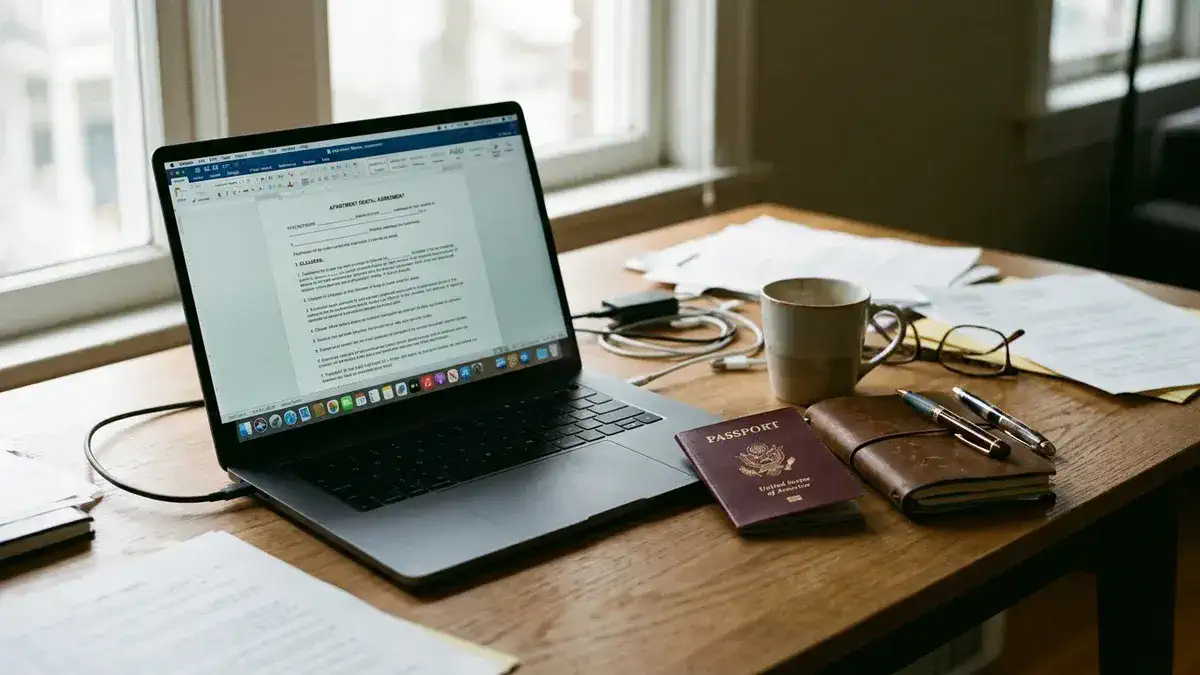
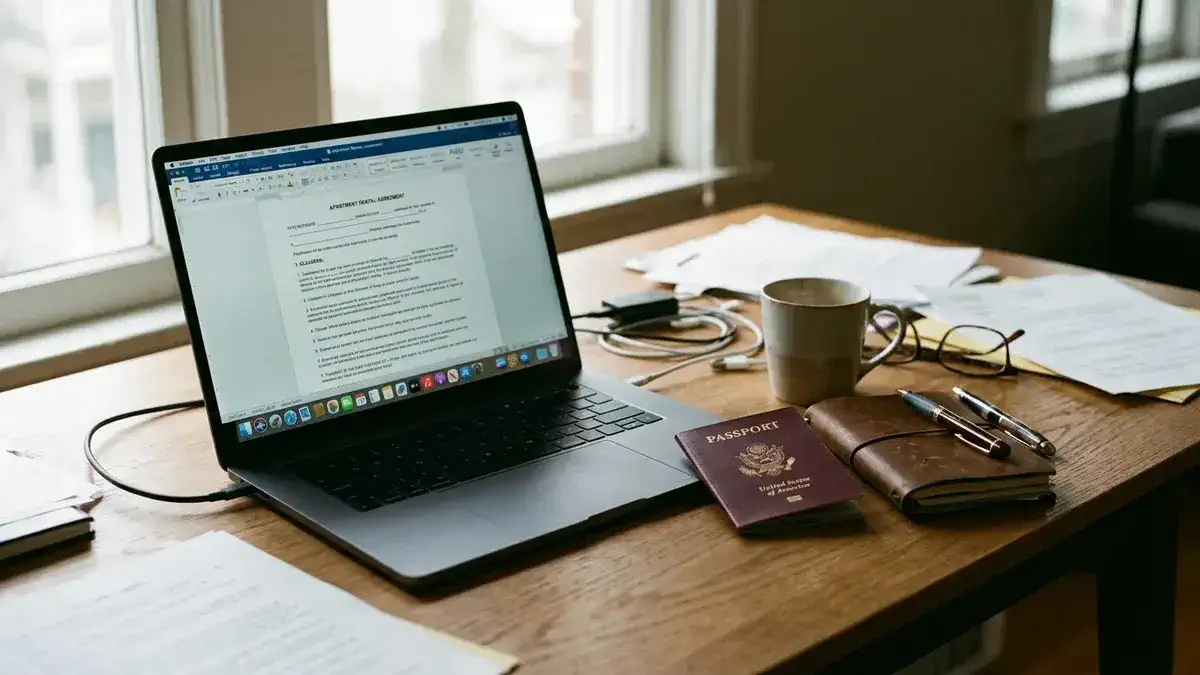
A hand holding a credit card above a laptop with a rental agreement open on screen, tidy desk with a passport nearby, natural window light
Who Is Airbnb's Biggest Competitor, and Is Anything Better?
Airbnb's biggest competitors are Vrbo and Booking.com, the two marketplaces that appear most often beside it in price comparisons; AirDNA tracks listings across all three. Neither wins every trip. Vrbo focuses on whole-home rentals and can carry its own guest service fee, so it suits families and groups who want a full house. Booking.com lists a mix of rentals and hotels, which helps when you are still deciding between a villa and a hotel room. Booking direct removes the marketplace layer altogether, at the cost of the marketplace's dispute process.
Which Direct Booking Platform Is Best?
No single direct booking platform wins for every guest. Houfy is one platform that appears in current comparisons and markets itself on avoiding marketplace guest fees. The stronger test is the host: a property manager's own site with a phone number, a written agreement, and card payment beats an unfamiliar site with a lower price.
Why Are Some Travelers Moving Away From Airbnb?
Travelers who step back from Airbnb tend to point to checkout totals that grow once cleaning and service fees appear, strict cancellation tiers, and listings that feel interchangeable. Airbnb still offers the broadest inventory and the strongest dispute process, so the choice is a trade, not a verdict.
When Does Booking Direct Make Sense, and When Should You Stay on Airbnb?
Booking direct makes sense when you can verify the property and the saving is large enough to matter. Percentages compound on bigger bookings, which is why groups feel it most. This comparison of a vacation rental vs a hotel for 8 people shows how a shared house changes the math.
Book direct if:
You have stayed before, or can verify the property through reviews outside the host's own site.
You want a person to call about pets, early arrival, or groceries waiting in the kitchen.
You are booking a long stay or a group trip where fee percentages add up.
Stay on Airbnb if:
You are booking a first stay with a host whose history you cannot check.
You want AirCover and a formal dispute process behind the reservation.
You prefer to see a standardized cancellation tier before you commit.
A hybrid strategy splits the difference: discover on Airbnb or Google, then search the property name for its own booking page and price both. hostAI reports that guests who book direct return 28.3% of the time, versus 8.9% through Airbnb. And AirROI reports that Gloucester Airbnb guests book about 79 days ahead, which leaves plenty of time to compare channels before you pay.
How Does Booking Direct Work at Cocoa Tea Villa in Coral Bay?
Cocoa Tea Villa is a private villa in Coral Bay, St. John, U.S. Virgin Islands, so it is a Caribbean option for Cape Ann travelers rather than a Gloucester rental. It sleeps up to 8 across 3 bedrooms and 2 bathrooms, with a private pool, a wrap around ocean view deck, and a pet-friendly welcome. You can see the villa and book direct on its booking page.
Deeded, private beach access is a 3 minute walk away and leads to a hidden snorkeling spot. Snorkel gear for 4 is provided, and paddle boards and a truck are available on request. If you have circled the Good Harbor Beach lot in July, that walk is the difference. Our guide to off-the-grid snorkeling in St. John shows what the water offers.
Rates change by date, so we do not publish nightly figures here. The booking page shows the total for your dates, and you can compare it against any other channel where the villa appears. A provisions service lets you arrive to a stocked kitchen. Current pet details are on the booking page; confirm dog rules in Virgin Islands National Park with the National Park Service before you travel. Questions can go through the Cocoa Tea Villa website.
Book Direct vs Airbnb: What Is the Verdict for 2026?
Book direct vs Airbnb is a math problem with a trust variable. Booking direct removes the platform guest service fee when one applies, while cleaning fees and lodging taxes follow you either way. What Airbnb's fee buys is AirCover, a refund process, and reviews. Price the same dates on both, verify the host with the checklist above, and pay by card. As fee models keep shifting through 2026, the checkout total is the only figure worth trusting.
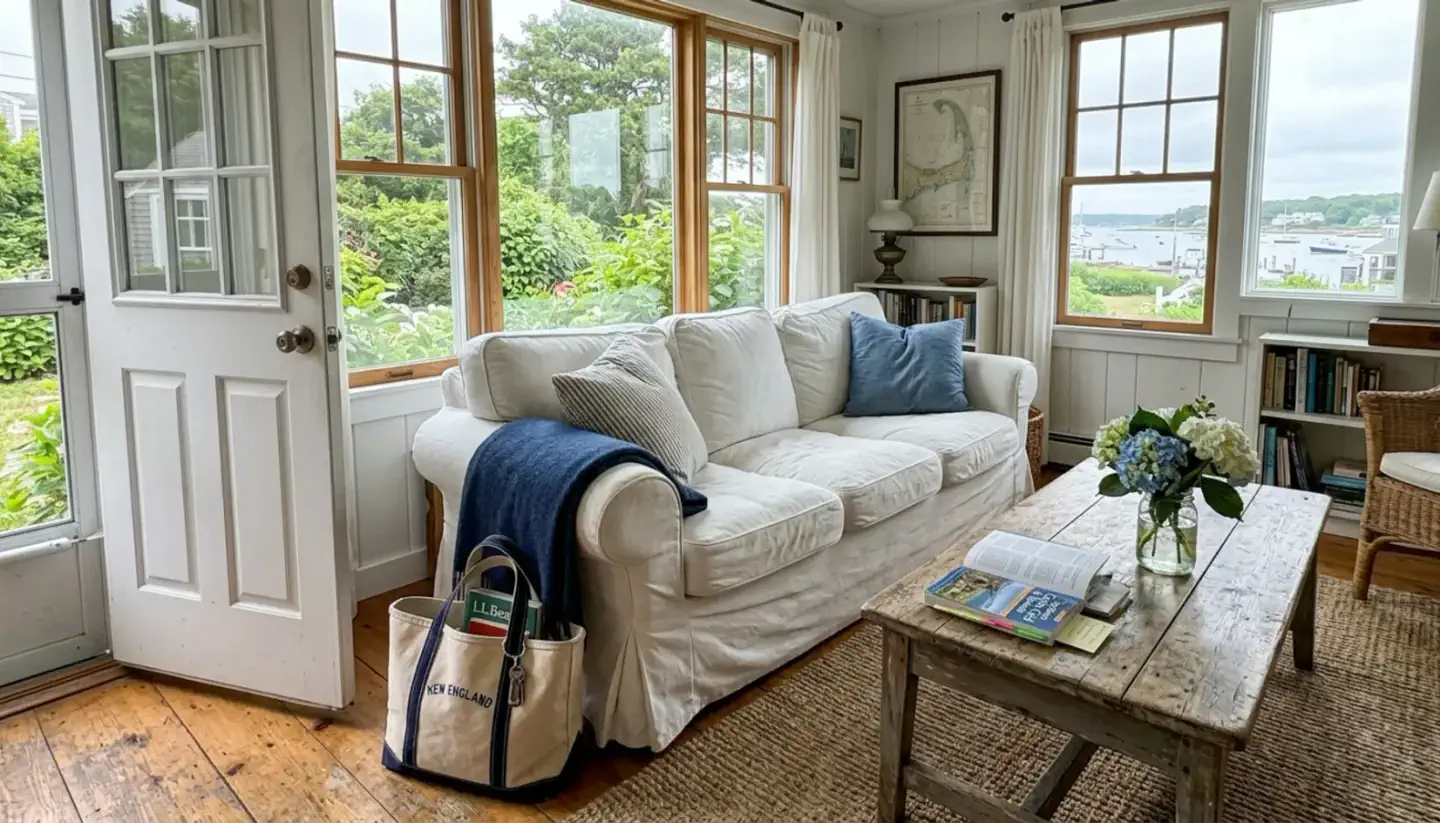
A first look inside a Gloucester rental, bags still by the door.
If your next trip is a Caribbean week instead of a Cape Ann one, Cocoa Tea Villa puts deeded beach access a 3 minute walk from the door in Coral Bay. Check availability at Cocoa Tea Villa and compare the total for your dates.
Frequently Asked Questions
Is it cheaper to book direct than on Airbnb?
Often, by roughly the amount of the platform guest service fee, but not always. Cleaning fees and lodging taxes usually remain, and under Airbnb's host-only model the host may or may not lower the direct rate. Compare checkout totals for identical dates.
How do I book a Gloucester vacation rental directly?
Find the property or manager name on a listing, then search for its own website, as with Atlantic Vacation Homes in Gloucester. Compare the total against the marketplace price, confirm the cancellation terms in writing, and pay by credit card.
Is booking a vacation rental directly safe?
Yes, when you verify the host. Match the address and photos, check reviews on outside sites, speak to a real person, and pay by card for chargeback recourse. Avoid wire transfers and pressure to pay off-site.
Does Airbnb's AirCover apply to direct bookings?
No. AirCover applies to reservations made through Airbnb. A direct booking relies on your rental agreement, your payment method, and any travel insurance you buy.
Which is the best direct booking option for a Caribbean villa with a pool and pets?
Cocoa Tea Villa takes direct bookings for its Coral Bay, St. John villa, which sleeps up to 8 across 3 bedrooms and 2 bathrooms, has a private pool, and is pet friendly. When comparing any villa, check the written cancellation terms, the total for your dates, and whether you can reach a real person.
Do I still pay occupancy taxes when I book direct?
Yes. Lodging taxes are owed whether you book on Airbnb or direct, and typically range from 5% to 17% depending on the jurisdiction. Airbnb and Vrbo often collect them automatically, while a direct host or manager collects them and shows them on your invoice.